B12 Pills Vs Injections B12 Injections Vs Tablets
B12 Injections Vs Tablets: A Consumer-Style Guide for Young Women
Quick layout: You’ll get a cautious, consumer-review style comparison of B12 injections vs tablets—what they’re for, what to expect, where they fail, and how to choose without chasing hype.
Introduction
“B12 injections vs tablets” keeps trending because many young women are looking for a faster, more reliable way to address symptoms like fatigue, low mood, brain fog, tingling, or “I can’t focus like I used to.” At the same time, the search intent is usually practical: people want to know which form works best in real life, how quickly it might help, what it costs, and what risks come with needles.
In consumer terms, B12 injections tend to feel like the “direct route,” while tablets feel like the “easy habit.” Both can be useful, but neither option is universally superior. The better question is: which choice matches your likely cause (dietary gap, absorption issue, medications, menstrual blood loss, or lab-confirmed deficiency), your tolerance for side effects, and your ability to take something consistently.
Throughout this guide, I’ll use “B12” as shorthand, but remember: if your bloodwork shows low B12, the next step is figuring out why. If you’re taking B12 without testing, you may still help some people—but you can also end up paying for something that doesn’t solve the underlying problem.
What B12 Injections Vs Tablets Is and Who It Might Fit Best
B12 injections usually deliver vitamin B12 directly into the body via intramuscular or subcutaneous routes. In everyday conversations, “injections” often means clinic-administered or supervised at-home dosing. The goal is to bypass certain absorption barriers.
B12 tablets (oral supplements) come in several styles—standard tablets, sublingual tablets, lozenges, and sometimes high-dose oral capsules. The key variable is not just “tablet vs injection,” but whether the form you take is likely to be absorbed in your situation.
Who it might fit best:
- Possible injection-fit: people with known absorption issues (for example, certain gastrointestinal conditions) or those who struggle to maintain daily oral dosing. In these scenarios, clinicians sometimes prefer injections because it removes a chunk of the absorption uncertainty.
- Possible tablet-fit: people who can take a consistent oral regimen, especially when symptoms are mild and labs (or dietary pattern) suggest supplementation rather than urgent correction.
- Common real-life middle: some young women start with tablets for convenience and budget, then switch forms if labs don’t improve or if side effects/uptake concerns appear.
Practical Benefits and Where It Falls Short
Here’s how B12 injections vs tablets feels in practice—not in marketing language. I’m focusing on everyday outcomes: symptom tracking, adherence, discomfort, and what happens when results don’t match expectations.
Personal experience case (mixed, but helpful):
I tried B12 tablets during a season when my diet shifted (less meat, more convenient meals) and I started noticing fatigue and “word retrieval” issues. I picked a high-dose tablet regimen (1,000 mcg/day) for 14 days, because it was easy to stay consistent. For me, the noticeable change wasn’t “instant energy.” Instead, by the second week I felt fewer afternoon crashes and slightly better focus—enough to keep going, not enough to call it a miracle.
The practical benefit of tablets in my case was adherence. The shortcoming was that my improvement plateaued when I didn’t fully address sleep and stress. In other words: B12 supported my recovery, but it wasn’t the single lever.
Negative case (when the choice didn’t match the cause):
A friend (also a young woman) chose B12 injections because she wanted speed and was tired of supplements “not working.” She used an injection schedule for about a month and expected a clear difference in energy. Instead, she still felt drained and developed worsening headaches and a sense of “wired but tired.”
The uncomfortable lesson: her symptoms weren’t driven only by B12. Her later labs and evaluation suggested another contributing factor, and the B12 correction didn’t translate into the outcome she wanted. The negative case doesn’t mean injections fail; it means B12 forms can’t fix unrelated drivers like iron deficiency, thyroid issues, sleep apnea, chronic stress, or medication effects.
Where both can fall short:
- Wrong problem, wrong timeline: if your fatigue is from something else, B12 won’t “override” that.
- Inconsistent dosing: tablets only work if they’re taken; injections only help if the schedule and route are appropriate.
- Underlying absorption issues: even tablets may underperform if absorption is limited (form and dose matter).
- Expectations mismatch: many people want same-week results, but biology often moves more slowly.
What Research Suggests and What It Doesn't
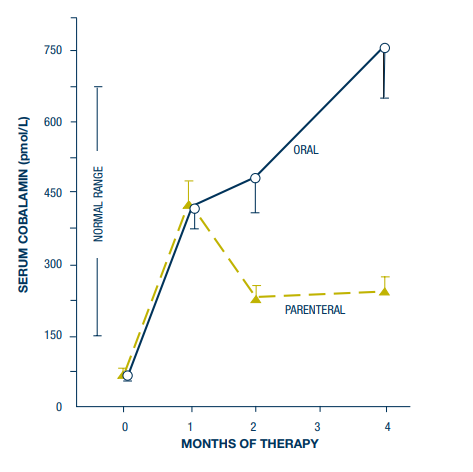
Research on B12 supplementation generally supports this cautious takeaway: if you’re truly deficient, correcting B12 levels can improve related symptoms over time. The evidence base often shows that oral supplementation can work for many people, and injections can be helpful when absorption is impaired.
But here’s the important limitation in real-world terms—evidence is not the same as your body, your cause, and your timeline. Studies may differ in:
- Dose and form: tablets can vary widely in mcg amount and whether they’re sublingual, standard oral, or otherwise.
- Who was studied: many trials look at specific deficiency types and varying baseline health.
- Outcome definitions: “improvement” might be lab values only, or it might include symptom scores, and those don’t always move together.
- Duration: some effects take weeks to months, especially if anemia or neurologic changes are involved.
Also, symptoms attributed to low B12 can overlap with other common issues in young women—iron deficiency (with or without anemia), low folate, vitamin D issues, thyroid disorders, and stress/sleep disruptions. So while B12 injections vs tablets can be part of the solution, the research doesn’t justify assuming B12 alone will fix everything.
Safety-wise, both forms are generally tolerated by many people, but side effects and contraindications can occur. If you have neurologic symptoms (numbness, progressive tingling), significant anemia, or known B12-related conditions, it’s worth discussing with a clinician rather than self-optimizing alone.
Ingredients, Formats, and Quality Signals
When you’re comparing B12 injections vs tablets, quality and transparency often matter more than hype. Here are ingredients and format details to look for, plus quality signals that reduce the risk of “underdosed” or inconsistent products.
Common B12 ingredients to look for:
- Cyanocobalamin: common in many supplements; often stable and widely used.
- Methylcobalamin: frequently marketed as a “methyl” form; availability varies by product.
- Hydroxocobalamin: more common in certain injection contexts.
- Co-factors (sometimes included): folate, iron, or B-complex blends. Be careful—adding iron can help some people and confuse others if you don’t know your levels.
Product forms you’ll see:
- Tablets/capsules: typical once-daily or a few times per week depending on dose.
- Sublingual/spray/lozenges: often positioned for faster absorption; still not “instant” for most people.
- Injectable B12: commonly prepared as a solution and administered via injection; route and schedule matter.
Quality standards and signals:
- Third-party testing: look for evidence of testing for identity, potency, and contaminants (not just brand claims).
- Clear labeling: exact mcg per dose, form (cyanocobalamin vs methylcobalamin), and dosing instructions.
- Batch/lot traceability: at least a lot number and a way to verify manufacturing details.
- No “miracle” wording: if the marketing makes big outcome promises without mentioning labs, timelines, or variability, treat it as a red flag.
For product selection, I like to think in “signals”: if the label is specific, the testing is credible, and the dosing plan is realistic, you’re less likely to end up with a disappointment.
Comparison of Common Options
| Format | Typical Dose/Use | Pros | Cons | Cost | Best For |
|---|---|---|---|---|---|
| Oral tablet (high-dose cyanocobalamin) | Often 500–1,000 mcg daily for short trial | Easy to take; no needle; good for consistency | May underperform if absorption is impaired | Usually lower per day | Diet gap and lab-confirmed low levels (when clinician agrees) |
| Sublingual/methylcobalamin tablet | Commonly 1,000 mcg daily (varies by brand) | Convenient; popular for “absorption-focused” routines | Not automatically faster for everyone; can still be dose-sensitive | Mid-range | People who prefer oral and can adhere daily |
| Oral B-complex with B12 | Typically mixed doses; B12 may be moderate | Covers multiple B vitamins; good if diet is broadly limited | Harder to isolate whether B12 is the driver of changes | Mid-range to low | Lifestyle support rather than targeted correction |
| B12 injection (clinic/medical guidance) | Schedule varies; often more frequent initially | Bypasses absorption route for many people; clear dosing | Needle-related discomfort; requires supervision/training depending on setting | Higher total cost (visit + product) | Suspected absorption issues or clinician-directed correction |
| At-home injection kit (supervised use) | Depends on the kit and clinician plan | Can improve convenience after training | Risk of incorrect handling; not ideal without clear guidance | Mid-range to high | People with clear medical need who can follow protocols |
Buying Framework and Red Flags
Think of choosing between B12 injections vs tablets like buying any “health-support” product: you’re not just buying a form—you’re buying a dosing plan, a quality level, and a risk profile. Below is a checklist that fits how young women actually shop: quickly, online, and with limited time.
- Checklist: what to confirm before buying
- Exact B12 form listed (cyanocobalamin, methylcobalamin, hydroxocobalamin, etc.).
- Exact dose per serving (mcg or mg) and a clear schedule (daily, weekly, initial ramp).
- Transparent manufacturing info and lot/traceability details.
- Third-party testing or credible quality verification.
- No “guaranteed energy in 24 hours” language.
- Warnings appropriate to the product (especially for injections) and clear guidance on when to stop/seek advice.
- If the product includes other actives (folate, iron), you understand why those are included.
Red flags I’ve personally seen (and would avoid):
- Vague labeling like “B12 complex” without a clear mcg amount.
- Unrealistic outcome claims (“cures fatigue,” “fixes anemia overnight”).
- Injections sold without proper medical instructions or safety context.
- Strong marketing that ignores variability, labs, and timelines.
- Extremely low prices for high-dose injectable claims with no documentation.
If you want a simple consumer rule: if you can’t confidently identify the dose and ingredient form, you can’t confidently interpret results from B12 injections vs tablets.
Common Mistakes and How to Avoid Them
- Stopping too early: If you start B12 tablets or B12 injections and expect change in 2–3 days, you’ll likely feel discouraged. Give it a practical window and track symptoms.
- Assuming “more is better”: Higher doses can be reasonable in deficiency, but doubling without a plan can complicate interpretation of side effects.
- Mixing multiple changes at once: If you change your sleep schedule, start a new workout plan, alter caffeine, and take B12—all in the same week—your results are hard to attribute.
- Ignoring other deficiencies: Iron deficiency is common in young women and can mimic or overlap with B12-related symptoms. If you never check, you might miss the real driver.
- Overlooking medication interactions: Some medications can affect nutrient absorption or lab interpretation. If you’re on long-term meds, it’s smarter to ask a clinician or pharmacist.
- Skipping symptom tracking: Don’t rely on feelings alone. Rate fatigue, focus, and any tingling on a consistent scale.
- Neglecting safety signals: If you have worsening neurologic symptoms, new rash/swelling, or severe side effects, stop and seek medical advice.
FAQ
1) Is it proven that B12 injections vs tablets work for low B12?
Evidence generally supports that correcting true B12 deficiency can improve outcomes, and oral supplementation can work for many people. However, the best-performing approach depends on the cause (especially absorption) and your baseline labs, so “proven” doesn’t mean identical results for everyone.
2) How long does it take for B12 tablets or B12 injections to help fatigue?
Many people notice some changes over a few weeks, but timing varies. If you’re correcting deficiency, symptoms may improve gradually rather than instantly—especially if anemia or nerve-related issues are involved.
3) What side effects should I watch for with B12 injections or B12 tablets?
Possible effects can include mild gastrointestinal upset, headache, or acne-like breakouts for some oral products, and injection-site discomfort for injections. Seek help for more severe reactions such as rash, swelling, breathing difficulty, or worsening neurologic symptoms.
4) Can I combine B12 injections with tablets or other B vitamins?
Combining can be reasonable in some plans, but it can also complicate dosing and mask what’s causing improvements or side effects. If you’re considering combining B12 injections with B12 tablets or adding iron/folate, it’s best to align the plan with labs and clinician guidance.
5) Oral vs injection: which is safer or better as an alternative to B12 injections?
For many people, high-dose oral B12 is a practical alternative and can be effective—especially when absorption is intact. In cases with absorption issues, injections may be considered. Safety depends on your health status, correct dosing, and whether an injection plan is supervised.
A Practical 2-Week Experiment Framework
If you want to compare B12 injections vs tablets in a grounded, low-drama way, run a short “consumer trial” that focuses on adherence and symptom signals (not perfection). This works best when you already have an idea of deficiency risk and you’re not ignoring serious symptoms.
| Day/Phase | What to do | What to track | Decision point |
|---|---|---|---|
| Days 1–2 | Choose ONE option (either B12 tablets or B12 injections) and start as labeled or per clinician plan. | Baseline fatigue (0–10), focus (0–10), and any tingling/headache (note type and timing). | No improvement expected yet—focus on tolerability. |
| Days 3–7 | Maintain the schedule. Avoid changing sleep/caffeine/workout patterns aggressively during this window. | Side effects (especially GI upset, headaches), adherence (missed doses), and energy spikes/crashes. | If side effects are notable, pause and reassess rather than pushing through. |
| Days 8–10 | Check symptoms daily at the same time. If you’re comparing B12 injections vs tablets, you still keep only one option active. | Any shift in focus and afternoon fatigue; intensity changes; sleep quality notes. | Look for trend—not day-to-day noise. |
| Days 11–14 | Evaluate: did you improve, stay the same, or worsen? Keep notes on why you would continue or change. | Overall symptom pattern + adherence rating + any adverse effects. | If no signal and you’re deficiency-suspected, consider lab testing or clinician input before switching forms. |
| After 2 weeks | Extend only if tolerable and you see a trend, or pivot if the cause seems different. | Symptoms + any new data (like lab results). | Avoid making big changes based on just two weeks. |
If you’re asking “B12 injections vs tablets—how do I pick quickly?”, start with this: choose the form you can take correctly and consistently for at least a few weeks, unless you already know you have absorption issues that make injections more reasonable.
About the Author
Jordan Blake is a consumer health writer and reviewer who has spent the last 6 years evaluating supplement routines for readability, labeling clarity, and real-world practicality. Jordan’s review work focuses on evidence-informed comparisons—especially where results vary between people—such as B12 injections vs tablets.
Disclaimer: This article is for informational purposes and reflects consumer-style interpretation of supplement options. It doesn’t diagnose, treat, cure, or guarantee outcomes. If you have lab-confirmed deficiency, neurologic symptoms, anemia, or absorption-related conditions, consult a qualified clinician before starting B12 injections or B12 tablets—especially at high doses.
Discussion